
Quick Summary
Car accidents in Leland and Brunswick County can look simple at first but become more serious once pain, repair delays, missed work, and insurance questions develop. Higher-speed routes, commuter traffic, bridge and highway travel, and delayed symptoms can all change the real impact of a crash. This article explains what to watch for and why early documentation matters.
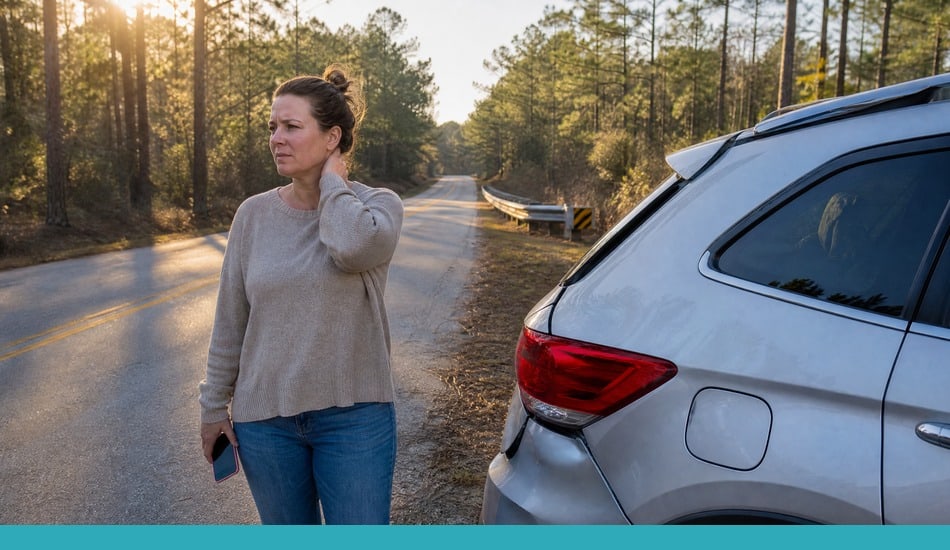
A crash in Leland or Brunswick County may not look dramatic at the scene. The vehicles may be moved to the shoulder. Everyone may be walking around. You may tell yourself it could have been worse.
Then the next morning comes.
Your neck is stiff. Your shoulder hurts. Your car is still not drivable. You are trying to get across the bridge, get to work, get your children where they need to be, and answer calls from an insurance company that seems to be moving too slowly.
That is when a “minor” accident starts feeling different.
Local Roads Can Change The Force Of A Crash
The firm’s intake notes flagged an important local difference: accidents around Leland and Brunswick County often involve higher-speed travel than the stop-and-go feel of some Wilmington roads.
That matters because crash severity is not only about how the vehicles look. It is also about:
- Speed at impact.
- Vehicle size and angle of collision.
- Whether the crash involved a highway, bridge, intersection, or turning movement.
- How the body moved inside the vehicle.
- Whether pain showed up hours or days later.
A person can walk away from a crash and still have an injury that needs care. That is why the first few days after a Leland accident matter so much.
It also matters because the first version of the story is often written quickly. The crash report, the insurance notes, the repair estimate, and the first medical visit can all shape how the claim is viewed later. If those early records make the crash sound smaller than it felt, it can be harder to explain the full impact after the fact.
Delayed Symptoms Are Common After Car Accidents
Adrenaline can hide pain at the scene. People often decline medical care because they feel embarrassed, busy, or unsure whether the pain is serious enough.
The problem is that delayed symptoms can become the center of the injury claim later.
Watch for symptoms such as:
- Neck or back pain that gets worse after sleeping.
- Headaches, dizziness, or confusion that were not obvious right away.
- Shoulder, wrist, hip, or knee pain from bracing during impact.
- Numbness or tingling in the arms, hands, legs, or feet.
- Sleep changes because pain makes it hard to get comfortable.
If symptoms appear, document them and get medical care. Waiting can affect both your health and the insurance company’s view of the claim.
Brunswick County Commutes Can Make The Disruption Bigger
Injury is not the only issue. A crash can disrupt the entire week.
For someone in Leland, Belville, Bolivia, Southport, Shallotte, or another Brunswick County community, losing a vehicle can create a chain reaction. Work may be across the river. Medical appointments may be in Wilmington. School, caregiving, and errands may require long drives.
That is why a crash that looks manageable on paper may feel overwhelming in real life.
The firm has a dedicated Leland personal injury lawyer page because geography matters. The questions people ask after a crash in Brunswick County are not always the same as the questions people ask after a short in-town fender bender.
Insurance Companies May Focus On Vehicle Damage, Not Your Body
Insurance companies often look at photographs, repair estimates, and statements. If the vehicle damage does not look severe, they may treat the injury claim skeptically.
That is one reason you should not rely on vehicle damage alone to tell the story.
Your documentation should include:
- Photos of the vehicles and scene. Take wide and close-up photos.
- Medical records. Tell providers the crash caused or worsened your symptoms.
- A symptom log. Keep notes about pain, sleep, work limits, and daily activities.
- Repair and rental records. Save estimates, invoices, tow bills, and rental information.
- Witness information. If someone saw the crash, get their name and phone number.
This documentation matters if the insurer later says the crash was not serious enough to cause the problems you are describing.
Fault Questions Are Especially Important In North Carolina
North Carolina’s fault rules make accident documentation critical. If the other driver or their insurer says you contributed to the crash, that argument can create a serious obstacle.
That is why you should be careful with casual statements at the scene or on the phone.
Avoid saying things like:
- “I am fine.”
- “I am sorry.”
- “I probably should have seen them.”
- “It was not that bad.”
- “I do not think I am hurt.”
You can be polite without guessing. Stick to facts. Let medical providers evaluate your injuries. Let the evidence develop before you accept blame or minimize what happened.
People looking for help after a serious crash can also review the firm’s Wilmington car accident lawyer page for additional guidance on injury claims and insurance issues.
Real Clients Notice The Difference Communication Makes
After a crash, people want clear communication. They want to know what is happening and what to expect.
One reviewer who worked with the firm after an automobile accident wrote that the team was “professional and attentive from start to finish.” Another said the office “made everything feel smooth and stress-free.” A Leland-area accident reviewer wrote that the team “made me feel completely at ease thru my accident claim.”
Those comments reflect what people often need most after a crash: calm help from someone who has handled this process before.
Talk To A Local Firm Before The Story Gets Written Without You
The insurance company will start building its version of the accident quickly. That version may focus on vehicle damage, early statements, gaps in care, or disputed fault.
You should build your version too, with medical care, photos, records, and clear guidance.
That does not mean exaggerating the accident. It means documenting it honestly before details fade. Where were you going? What hurt first? What changed the next morning? Who did you talk to? What did the adjuster ask you to sign? Those small details are easier to collect now than several months later.
If you were hurt in a Leland or Brunswick County crash, contact Christina Rivenbark & Associates before the insurance process gets too far ahead. Come on in, let’s talk. You can contact the firm or call the Leland office at 910-793-0000.



 ES
ES