

Quick Summary
North Carolina driver’s license points can put your driving privileges at risk if enough points build up within a three-year period. NCDMV says a license may be suspended after twelve points in three years, or eight points within three years after reinstatement. This article explains why points matter, why insurance points are a separate issue, and when it is worth talking with a traffic attorney before simply paying a ticket.
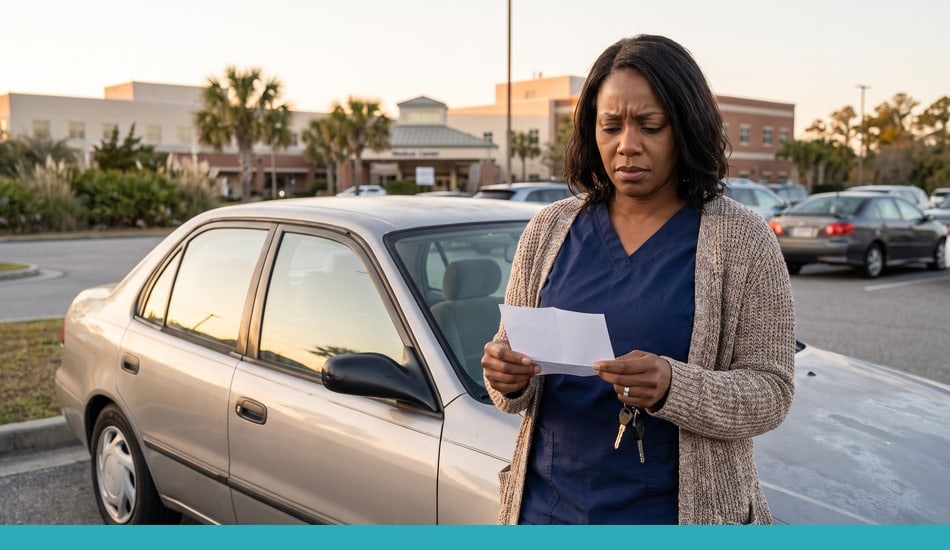
A traffic ticket can look small until you realize it may follow you longer than the fine.
In North Carolina, many moving violations can add driver’s license points. Those points matter because NCDMV can suspend a driver’s license when points accumulate. NCDMV states that a driver’s license may be suspended after twelve points within a three-year period. After reinstatement, eight points within three years can result in another suspension.
That is the part many people miss. The ticket is not just about what you pay today. It can affect your license status, your driving record, your insurance, and your ability to get to work.
License Points Are Not the Same as Insurance Points
North Carolina drivers often hear “points” and assume there is only one system. There are at least two concerns.
Driver’s license points affect your driving record and can lead to NCDMV consequences.
Insurance points affect what your car insurance company charges. A ticket can create an insurance increase even when the license-point issue feels manageable.
That is why paying a ticket online without getting advice can be expensive. It may feel like the quickest option, but it can function like an admission and create consequences you did not mean to accept.
Do Points Ever Go Away?
Points are tied to time periods and driving record rules, but the exact impact depends on the violation, your history, and what happens in court. NCDMV also notes that when a driving privilege is reinstated, previous points are canceled.
That does not mean every ticket becomes harmless with time. Insurance consequences, prior history, and repeat violations can still matter.
When To Talk to a Traffic Attorney
It is worth asking for help if:
- You already have points
- You drive for work
- You have a commercial license
- You were charged with speeding well over the limit
- The ticket happened in New Hanover, Brunswick, or Pender County and you are not sure what court requires
- You cannot risk a license suspension
- Your insurance cost is already high
Chris Oring and the traffic team at Christina Rivenbark & Associates help people understand what a ticket may actually mean before they make a decision that affects their license.
Why “Just Paying It” Can Be the Wrong Move
Paying a ticket may feel like the responsible thing to do. You are not ignoring it. You are handling it. But in many cases, paying the ticket means accepting the charge as written.
That can matter if the charge carries points, affects insurance, or puts you closer to a suspension. It can also matter if you already had another ticket in the past few years.
This is why a quick call can be worth it. The goal is not to make a simple ticket complicated. The goal is to make sure you understand whether the simple-looking option creates a bigger problem.
Local Court Practicalities Matter
A ticket in New Hanover County may not feel the same as a ticket in Brunswick County or Pender County. Court dates, prosecutor practices, reduction options, and documentation needs can vary.
People who live outside the area may also be unsure whether they need to appear in person, what happens if they miss court, or how a North Carolina ticket affects an out-of-state license. Those questions are worth asking before the court date passes.
The Bottom Line
North Carolina license points can stay relevant long enough to create real problems. Before you pay a ticket just to get it over with, make sure you understand the driver’s license and insurance consequences.
For traffic ticket help in Wilmington, Leland, New Hanover County, Brunswick County, or nearby areas, call Christina Rivenbark & Associates in Wilmington at 910-251-8080 or in Leland at 910-793-0000.



 ES
ES