
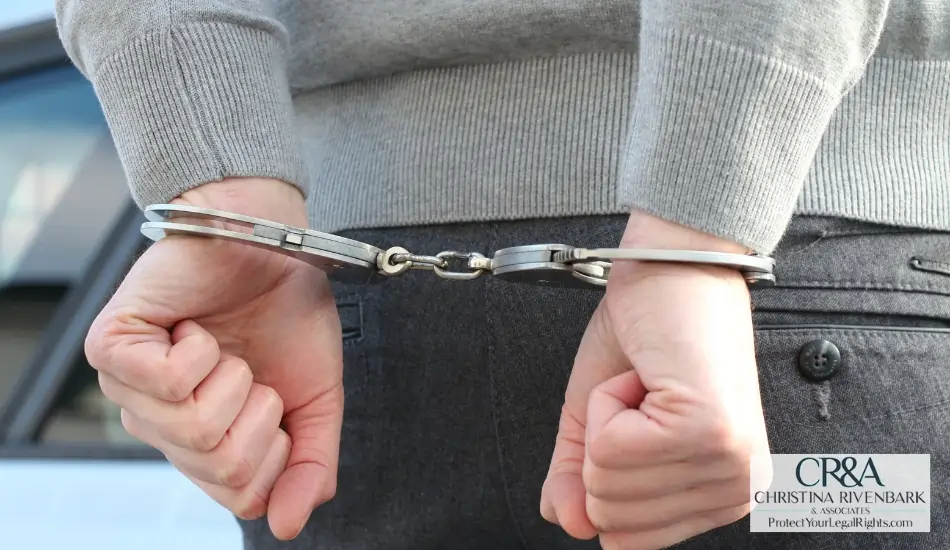
Being arrested for driving while impaired in North Carolina can prove to be a terrifying and uncertain event. If this is your first time being arrested for this charge, you will likely be wondering what happens after a DWI arrest in North Carolina. Whether your arrest followed a traffic stop along Wrightsville Avenue in Wilmington or Tradeway Drive in Leland, the team at Christina Rivenbark & Associates is here to defend and protect your rights.
Understanding the Legal Process Following a DWI Arrest in North Carolina
Every day across the United States, 37 people are killed by drunk driving, and in a single year, around 804,926 individuals are arrested for a suspected DWI. When you find yourself arrested on a suspected DWI, you must understand the legal process that is likely headed your way.
- Step 1: Arrest. When a law enforcement officer suspects that you are driving while impaired by drugs or alcohol, they can pull you over and perform a chemical test and/or a field sobriety test. If you are found to be driving with a blood alcohol content level, or a BAC, of 0.08% or higher, then you will likely be taken into police custody and then driven to the station for processing.
- Step 2: Release and Bond. Once you have been officially processed into the system, you could be eligible for release on specific conditions, especially if you are a first-time DWI offender. In these cases, release is often given if you provide a written promise to appear or when having a sober individual come pick you up. Release may also be based on paying a monetary bond or bail amount.
- Step 3: Arraignment. Following a DWI arrest, your first court appearance is referred to as an arraignment. At your arraignment, you will be made aware of the formal charges against you, be informed of the most severe form of punishment possible, have all release conditions reviewed and/or modified by the judge, and be given your next scheduled court date. It is essential to have an attorney present at your arraignment.
- Step 4: Prosecutor and Judge. You will want to make yourself aware of the roles of both the prosecutor and the judge involved in your case. The prosecutor acts on behalf of the state of North Carolina and will be trying to prove that you were, in fact, driving while impaired by alcohol and/or drugs. They will do so by presenting evidence. The judge will oversee all legal proceedings and work to protect the fair and full application of the law.
- Step 5: Defense. Once you have made your first court appearance in your arraignment, your lawyer can start to build your official defense strategy. This could include challenging the legality of the initial traffic stop, reviewing all field sobriety and breathalyzer tests for inaccuracy or wrongful administration, and entering into negotiations with the prosecutor assigned to your case.
- Step 6: Possible Outcomes. The official outcome of a DWI case will depend on a litany of factors, such as the strength of the evidence, the strength of your defense, and your own criminal history. Possible outcomes might include a full dismissal of the charges against you, the negotiation of a plea deal in order to reduce the charge to a lesser offense, or an official conviction, leading to fines, jail time, and license suspension.
- Step 7: License Penalties. If you are convicted of a DWI in North Carolina, you will likely have your driver’s license suspended or revoked for a certain period of time. During this time, you may be able to apply for a limited driving privilege, or an LDP, that would allow you to drive for essential reasons only, like school or work.
- Step 8: Post-Conviction. Even in cases where you are convicted of a DWI in North Carolina, there are still several legal options that may be available to help reduce penalties or appeal the court’s decision. Your attorney can review the facts of your conviction and determine which strategy, if any, is right for you.
FAQs
What Are My Rights in a DWI Case?
In a DWI case, you hold several rights. These include the right to remain silent, the right to legal representation, and the right not to answer questions from law enforcement until your attorney arrives at the station. If at any point during your arrest these rights are violated, this can be used in your defense.
What Should I Do Following a DWI Arrest?
Now that you understand the legal process that follows a DWI arrest in North Carolina, it is likewise important to know what you should personally do following the arrest. First, you need to comply with the police. Trying to argue or resist arrest will only make your case more difficult. You need to hire a lawyer as soon as possible, make note of all future court dates, and arrange necessary transportation to get home.
What Will Happen if I Refuse a Breathalyzer Test?
If you refuse a breathalyzer test in North Carolina after being pulled over for a suspected DWI, it will trigger any automatic license revocation for a set period of one year, no matter the outcome of your eventual case. Though you are legally able to refuse, doing so can often be used as evidence against you in a trial.
What Are the Penalties for a DWI Conviction in NC?
In North Carolina, you can face several different penalties should you be arrested and convicted of a DWI. These can include a combination of jail or prison time, hefty fines, parole or probation, community service, and the installation of an ignition interlock device. You will likely also suffer personal collateral damage, such as damage to your reputation and difficulty in finding new housing or employment.
Hire a DWI Lawyer Today
If you or a loved one is arrested for a DWI in North Carolina, you need to hire a DWI lawyer to defend you right away. These cases can move quickly, so you must reach out to the team at Christina Rivenbark & Associates right away. With convenient office locations in both Leland and Wilmington, we serve clients across North Carolina. Call us today to retain our services and let us defend you.



 ES
ES