Jacksonville Boat Accident Lawyer
Boat Accident Attorney in Jacksonville, NC
Boating is a way of life for those who live along the North Carolina coastline, but in an instant, your life can be turned upside down due to a boating accident. Dealing with issues of liability, insurance claims, and boating regulations after you have been injured can seem like an insurmountable task. A Jacksonville, NC, boat accident lawyer who aggressively pursues your case can help protect your rights and ensure that you are justly compensated.
About Christina Rivenbark & Associates
Injury victims in Onslow County deserve protection. We’re here for you. We are based near the Onslow County Courthouse. This means we’re familiar with the Onslow County courts, community, and legal system. Our firm also offers individualized representation, open communication, and tenacious advocacy for every client. Our firm can fight on your behalf in both settlement and litigation to secure the justice and compensation that you deserve.
Understanding Boat Accident Cases
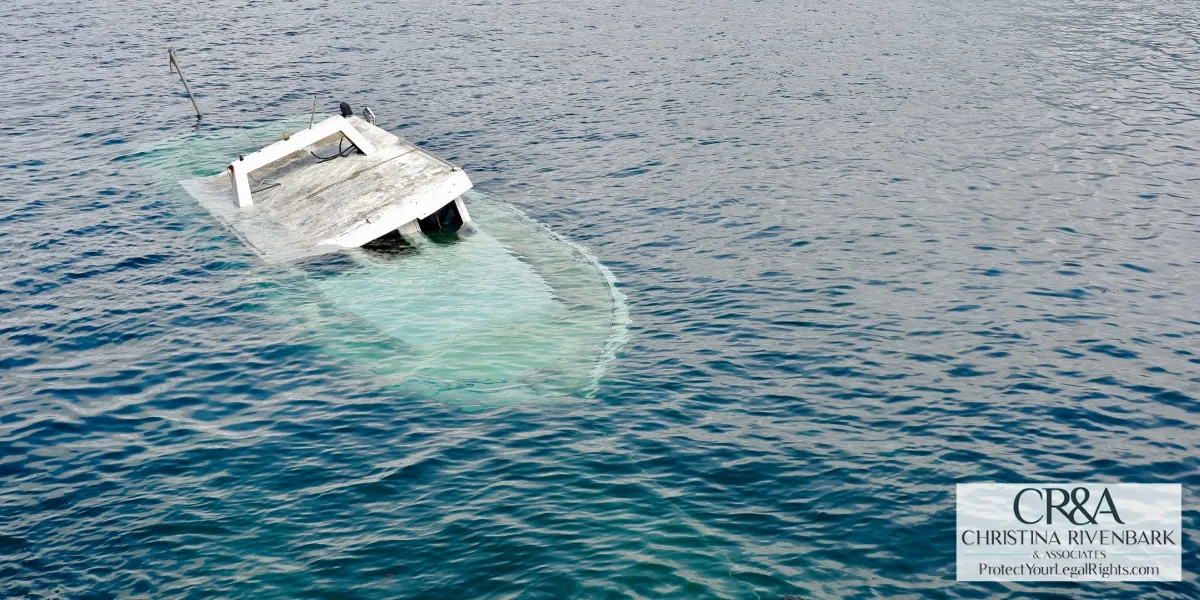
In 2023, there were 3,844 recreational boat accident cases. This resulted in 564 fatalities and 2,126 injuries, according to the Coast Guard. This also caused about $63 million in property damage. Boating accidents are much more complicated than typical personal injury claims. Federal maritime laws, state statutes, and unique liability issues can come into play. These are factors you do not see in a car accident claim. A Jacksonville boat accident attorney understands the connections between various legal areas and knows how to construct an effective legal case for their clients.
Boat accident claims usually stem from collisions, wake injuries, groundings, equipment malfunctions, or operating a vessel in unsafe conditions. Regardless of the cause of the accident, establishing negligence is critical. Your attorney can assess operator conduct, weather, speed, wake, safety equipment, and other watercraft’s actions to determine legal liability.
Common Causes of Boat Accidents
Boating accidents can occur for a variety of reasons, but many incidents share common causes and factors. Some of the most frequent situations leading to boating accidents include:
- Two boats colliding: In collisions between two vessels, both boat operators may be found at fault. Each operator is expected to comply with boating laws and exercise reasonable care, as with automobile accidents. Passengers who are injured as a result of the collision may have a personal injury claim against both operators.
- Accidents caused by water conditions, such as waves: Large wakes or sudden waves can throw passengers overboard or cause serious falls. Liability in such cases may depend on factors such as the size of the wake, boating traffic, visibility, speed, and whether the operator provided warnings to passengers.
- Hitting a submerged object: Boats can run aground on rocks, reefs, sandbars, or collide with objects that are not visible above the water’s surface.
- Lack of safety equipment: North Carolina boating laws require operators to carry life jackets, flares, navigational lights, fire extinguishers, and other safety equipment. Failure to have this equipment on board can lead to more serious injuries and may also be a factor in a negligence claim.
Relevant Boat Accident Laws in North Carolina
North Carolina law governing boating safety includes the North Carolina Boating Safety Act. This law and others establish standards for the safe operation of vessels, safety equipment requirements, navigation rules, and general boater conduct on all public waterways.
The most significant statute is N.C. Gen. Stat. § 75A-10, which prohibits operating a vessel in a reckless or negligent manner, or while under the influence of alcohol or drugs. The law also requires anyone involved in a boating accident to, if possible, provide or assist in obtaining medical aid to injured persons and to exchange identifying information with anyone injured or suffering property damage.
North Carolina also requires boater-education certification for vessel operators born on or after January 1, 1988, who operate a motorized vessel of 10 horsepower or more. The statutes set out the standard for safe operation and conduct and determine liability in most boat accident cases.
FAQs
What Happens if Someone Gets Hurt on Your Boat?
You may be legally liable for an injury to a passenger on your boat if the injury was caused by your negligence, for example, by speeding, failing to maintain a proper lookout, or not having the required safety equipment on board. North Carolina boating laws also require that you provide aid, exchange information, and report certain accidents. A passenger who was injured on your boat may have a claim for damages if negligence is a part of it.
Is North Carolina a Full Tort State?
North Carolina is not a full tort state. The state has adopted pure contributory negligence. This is one of the harshest liability rules in the nation. This rule completely bars an injured person from recovering compensation if they were 1% or more at fault for the accident. This also applies to boating accidents, so it is crucial to have legal representation.
What Is the First Action After a Boating Accident in Jacksonville, NC?
Safety is always the first concern following a boating accident in Jacksonville, NC. After making sure that everyone is out of harm’s way, you must check for injuries, provide reasonable assistance, and exchange identifying information as required by North Carolina law. You should also report the accident when necessary, seek medical attention, and document the scene for your claim.
What Report Must Be Filed if There Is an Accident While Boating?
An operator must report a Boating Accident to the Wildlife Resources Commission when death, serious injury, missing persons, property damage in excess of $2,000, or total loss of the vessel occurs. The report must be made within the specified time period and should include information about the accident, injuries, operation of the vessel, and contributing factors.
Hire a Boat Accident Lawyer
If you were injured in a boat accident due to another party’s negligence, hire a boat accident lawyer with Christina Rivenbark & Associates today. We understand how serious these accidents can be, and we can help you fight for the compensation you need to recover. Contact us today for a consultation.
Free Case Review Get The Help You Need
” * ” Indicates Required Fields
Our Locations Leland And Wilmington
location
4009 Oleander Drive Wilmington, NC 28403
location
403 Village Road, Leland, NC 28451


© 2026 Christina Rivenbark & Associates. All rights reserved.
Digital Marketing By 
 ES
ES