
What Is Contributory Negligence in a Car Accident in North Carolina?
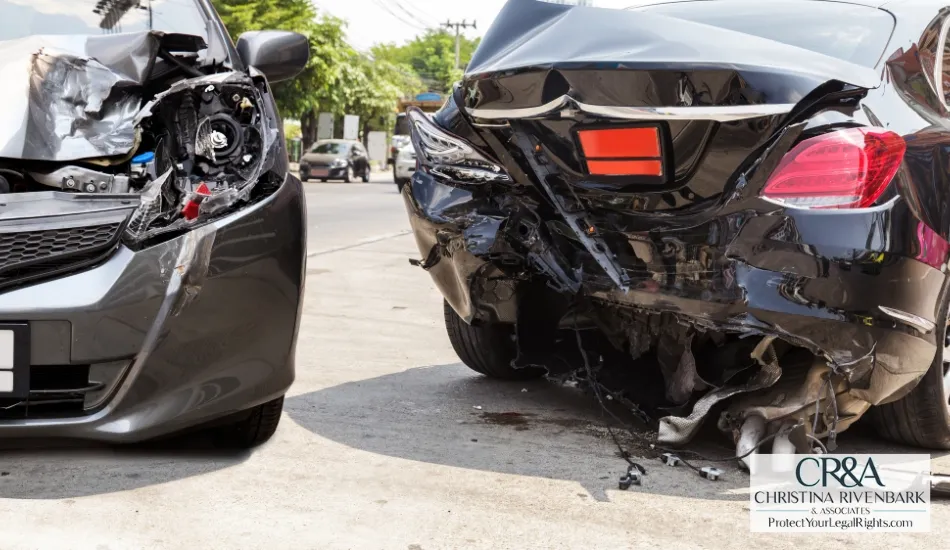
What is contributory negligence in a car accident in North Carolina? Contributory negligence is a legal doctrine that could affect your car accident claim in North Carolina. If you are found to be at fault, even slightly, for causing a crash in which you were injured, it may be more difficult to obtain compensation.
Since contributory negligence still applies in North Carolina and a few other states, it’s especially important to understand how this rule affects car accidents after a collision. Understanding how fault is determined in a crash can also help you understand why certain claims are denied or disputed.
Hire a Car Accident Lawyer
Christina Rivenbark & Associates has worked for more than 30 years for people who have been injured in motor vehicle accidents throughout North Carolina. The firm has often taken on cases in which there are disputed issues of liability and fault, including claims in which North Carolina’s contributory negligence rule comes into play.
Christina Rivenbark and her legal team take a close look at police reports, witness statements, and insurance records when assessing a client’s case in order to understand how fault might be determined. Clients can turn to our firm for experience and knowledge in handling the complex nuances of negligence in car accident cases.
Contributory Negligence in North Carolina: How it Works
North Carolina still follows the contributory negligence legal framework, along with a few other states. This means that the injured party may not recover damages if they are found to be even partially at fault for a car accident. Contributory negligence is different from comparative fault, the system used in most states.
Comparative fault only reduces damages according to the degree of fault. Contributory negligence, on the other hand, completely precludes recovery if any negligence can be attributed to the injured party. Contributory negligence is one of the most common car accident defenses. Insurance companies and the other side typically try to assign some level of fault to an injured driver.
Common Ways Contributory Negligence Is Alleged After Car Accidents
Contributory negligence is most commonly raised by an insurance company during the evaluation of a car accident claim. Speeding, failure to yield, distracted driving, failure to signal or change lanes, and disregarding traffic signals are some of the most common examples. This can also include relatively minor things like momentary distractions or minor traffic offenses.
Contributory negligence can be based on any facts that suggest the injured driver contributed to the accident. This can be an interpretation of accident reports, witness statements, or even vehicle damage.
Evidence to Prove Fault When Asserting Contributory Negligence
Crucial evidence that is reviewed for assessing contributory negligence includes the police crash report, photographs of the scene and damage, footage from traffic cameras, and witness statements. In some instances, accident reconstruction analysis is considered for speed, point of impact, and/or driver actions.
Medical records may also be scrutinized for purposes of proving causation. All of the evidence is considered for purposes of understanding how the collision occurred and whether the conduct of the injured party played any role in the events that caused the crash.
Exceptions and Defenses to Contributory Negligence
Exceptions to the harsh rule of contributory negligence may be applicable under certain legal doctrines. For instance, the last clear chance doctrine may apply when a defendant has the last clear opportunity to prevent a collision but does not take that opportunity. Other potential defenses to contributory negligence are available depending on the facts of the crash.
For example, even if alleged negligence on the part of the injured person is shown, whether that conduct caused the accident may also be in question. All these issues are fact-specific and depend on the actual evidence under North Carolina law.
FAQs
How Often Do Fault Disputes Happen After a Crash?
Fault disputes are common due to the high incidence of crashes. According to the North Carolina Department of Transportation, there were 284,546 reported motor vehicle crashes in North Carolina during 2024.
With so many collisions occurring, there are frequent instances of conflicting driver statements, unclear crash dynamics, and disputed evidence. These disagreements often prompt insurers to explore contributory negligence as a defense to limit or deny claims.
Does Contributory Negligence Apply Differently in Fatal Crashes?
The contributory negligence rule applies to both fatal and non-fatal crashes. The National Highway Traffic Safety Administration reported an estimated 39,345 traffic fatalities in the United States in 2024, indicating the frequency of serious crashes. In fatal accident claims, insurers may still raise contributory negligence arguments, even when injuries are severe, which can have a significant impact on wrongful death or survivor claims in North Carolina.
Can Contributory Negligence Prevent Me From Getting Insurance Money Before I Go to Court?
Yes, fault arguments can often be raised and used by insurance companies during the claims process to deny a claim or offer a low settlement. A determination of fault can be made on the basis of the accident report, recorded statements, or an initial investigation. Because the rule applies to the claims process, many cases are litigated or denied at this stage.
Contact a Car Accident Lawyer
It is very important to hire a car accident lawyer after a wreck in North Carolina. Contributory negligence can complicate and make car accident claims in North Carolina especially difficult. In fact, in some cases, claims may be denied even after serious car crashes when fault is disputed or unclear.
Attorneys at Christina Rivenbark & Associates have represented injured people throughout North Carolina for over three decades, including individuals who have been involved in complicated cases of negligence and liability. Our firm has a meticulous and evidence-based approach to analyzing police reports, witness statements, and insurance findings.
We have extensive experience with motor vehicle accident claims where the concept of contributory negligence has played a role, and we work with clients to help them understand how fault is determined and how their claims may be challenged.
If you have been hurt in a car accident, we encourage you to contact our firm for a consultation to discuss how the contributory negligence rule may impact your individual case and what legal remedies may be available to you under North Carolina law. Contact us today.
Free Case Review Get The Help You Need
” * ” Indicates Required Fields
Our Locations Leland And Wilmington
location
4009 Oleander Drive Wilmington, NC 28403
location
403 Village Road, Leland, NC 28451



© 2026 Christina Rivenbark & Associates. All rights reserved.
Digital Marketing By 
 ES
ES