
On Behalf of Christina Rivenbark & Associates
Updated October 6, 2026
Quick Summary
North Carolina drivers usually are not asking about dog car safety because they want a shopping guide. They are asking because they want to know what the law expects, what is safest, and what could go wrong if a dog is loose in the car. The short answer is that the safest move is to keep your dog secured in the back seat, out of the driver’s lap, and out of the path of an airbag. If a dog interferes with your driving or a crash happens, what felt harmless a minute earlier can suddenly become a real legal and injury problem.
If you have ever had a dog climb into your lap at a stoplight, put paws on the center console, or jump toward a window when another dog passed by, you already understand the real issue.
This is not just about pet comfort.
It is about whether the driver can still control the vehicle when something unexpected happens.
Are Dogs Required to Be Restrained in a Car in North Carolina?
The practical answer is that North Carolina drivers should not treat a loose dog like a harmless passenger. Current official North Carolina driving guidance focuses on safe control of the vehicle, and NCDOT also warns drivers not to leave pets unattended in vehicles. That means the safest approach is not to let a dog ride in your lap, block your mirrors, or move freely in a way that interferes with steering, braking, or seeing the road.
For most people, the better question is not, “Can I get away with this?”
It is, “What happens if my dog distracts me right when traffic changes?”
That is where the risk becomes real.
Why a Loose Dog Can Create a Bigger Problem than People Expect
Many Wilmington and Leland drivers think about pet safety only in terms of whether the dog might get hurt.
That matters, of course. A dog in the front seat can be badly injured by an airbag. A dog moving around during hard braking can be thrown forward. A dog that slips between seats can panic and make the driver react at exactly the wrong moment.
But there is another layer people miss.
If a driver loses focus because the dog climbs forward, blocks vision, or causes the driver to reach away from the wheel, the dog can become part of the story of how the crash happened. If another driver, a passenger, or a pedestrian gets hurt, that detail may matter later.
That is one reason it helps to understand distracted-driving risk before a crash instead of after one. Christina Rivenbark & Associates handles these cases through its Wilmington distracted driving accident lawyer and Wilmington car accident lawyer pages.
Where Should a Dog Ride in the Car?
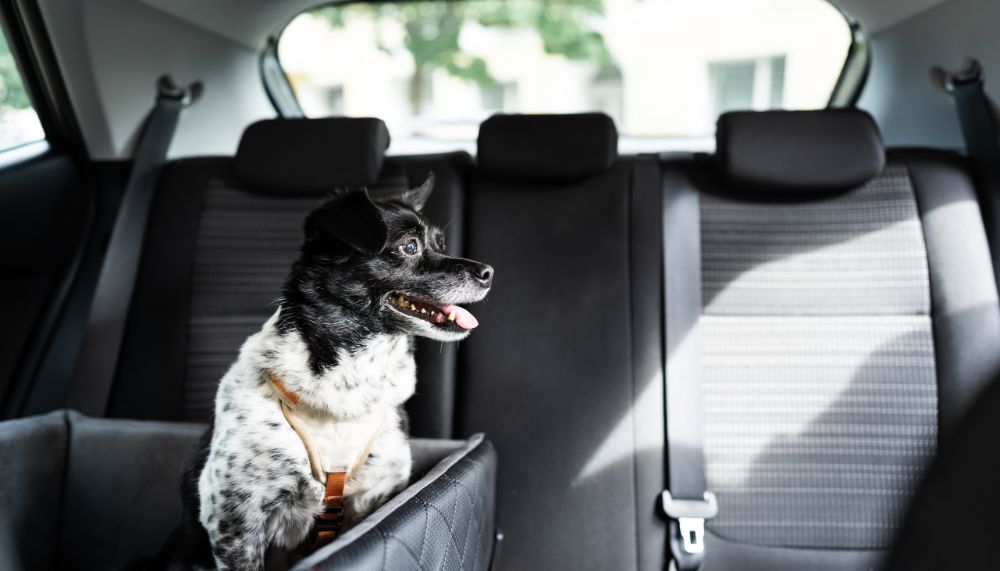
The safest default is the back seat.
That answer is simple because the main risks are simple:
- The front seat puts the dog too close to the airbag.
- The front seat makes it easier for the dog to interfere with the driver.
- The back seat gives you more ways to secure the dog safely.
For many families, the best setup is a harness that clips into the seatbelt system, a secured carrier, or a crate that is sized correctly and kept stable. The right option depends on the dog’s size, age, temperament, and the kind of vehicle you drive.
The goal is not to make the ride perfect.
The goal is to keep the dog from becoming a moving distraction in a moment where seconds matter.
Is It Okay for a Dog to Ride in Your Lap?
That is the setup drivers ask about most because it feels normal on a short trip.
It also creates one of the worst combinations of risk.
Your hands, sight lines, and reaction time are all affected at once. If the dog startles, slips, tries to climb higher, or gets under your arms, you are no longer reacting only to the road. You are reacting to the dog and the road at the same time.
Even if nothing happens most of the time, that does not make it a safe habit.
It only means the wrong moment has not happened yet.
What About Leaving a Dog in the Car?
This is another place where people underestimate the problem.
Even a quick stop can turn dangerous when the weather is hot, the windows are barely cracked, or the dog is already stressed. Official North Carolina highway-safety messaging specifically tells drivers not to leave children or pets unattended in vehicles, even briefly.
That matters because people sometimes assume a legal issue begins only if police write a ticket.
In real life, the bigger issue is often that a dog in distress can suffer a medical emergency long before the driver comes back.
What if a Crash Happens While My Dog Is in the Car?
Start with the same priorities you would have in any collision:
- Get to safety if you can.
- Call 911 when anyone may be injured or the scene is unsafe.
- Do not let a frightened dog run loose into traffic.
- Get medical care for people first, then veterinary care for the dog as soon as possible.
If another driver caused the crash, keep in mind that your own injury claim still matters even if you are also worried about your pet. A lot of people minimize their own pain because the dog is upset, the kids are scared, or the scene is chaotic. That is understandable, but it can make the next few days harder.
The firm’s Wilmington personal injury lawyer page is a good next stop if the crash left you sorting through treatment, missed work, and insurance calls.
What Drivers Around Wilmington and Leland Should Do Differently
The best AEO answer here is not complicated:
- Put the dog in the back seat.
- Use a secure harness, carrier, or crate.
- Keep the dog out of your lap.
- Do not assume a short drive means a low-risk drive.
- Do not leave the dog unattended in a hot car.
Those steps are simple, but they reduce the exact kinds of mistakes that turn an ordinary drive into a crash, an injury, or an avoidable argument with an insurance company.
A Practical Local Takeaway
Dog car safety is easy to dismiss because most trips end normally.
That is exactly why people ignore it.
But the real question is what happens when traffic stops fast on Oleander Drive, when a dog lunges during a turn, or when a sudden brake check gives you no room for error.
If a crash has already happened and you are trying to sort out injuries, insurance pressure, or liability questions, call Christina Rivenbark & Associates in Wilmington at 910-251-8080 or in Leland at 910-793-0000.



 ES